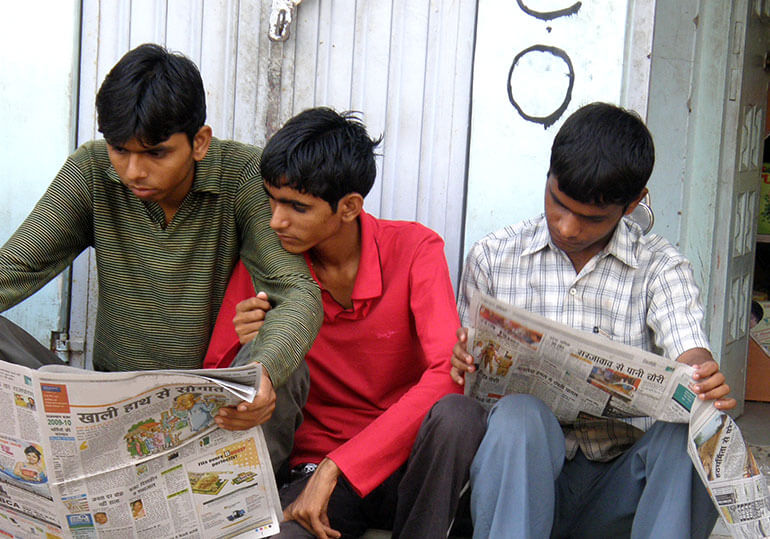
In India, Governments (Union and State) are one of the largest spenders on advertising and communication.The objectives of such state outreach campaigns can be classified into the following broad categories:
- Promoting Welfare Schemes
- Inducing Behaviour Change
- Creating Positive Perception (about the Government)
- Procurement of Services and Products
Promotion of welfare schemes among the intended beneficiaries is the most wide-impact communication exercise. Having worked on scores of such assignments, here’s my take on why and how sometimes governments, and their communication agencies, get it wrong.
The idea of this compilation is not to absolve myself of these mistakes but rather to remind myself as much to watch out for these stumbling blocks.
#1 Miss the Customer
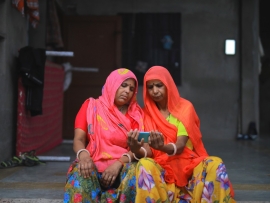
Agency professionals usually do not know the intended beneficiary − typical target customer, as we call it − quite well. They just have their own vague impression of that real person, and thousands like her/him, living in a small village far away. Nor do they make the effort to know them through a field visit or a deep interview with the client.
Most senior officers having worked in the field sometime or the other earlier in their careers know this “customer” well. But a detailed profiling is rarely a part of the briefing.
How can you create an effective message without even knowing whom you are speaking to!
#2 Get Creative
Creativity is the most valued skill in the world of advertising. And it is badly needed to be heard, and remembered, over the competitive clutter.
But hey cowboy, go slow with your creative ammunition, this is not your FMCG campaign! You need to craft the message in a way that (s)he understands it, without any ambiguity, and knows what to do next. Simple. So, keep it simple.
But getting simple isn’t that simple. Is it!
#3 Focus on Being Correct
In the Government ecosystem, correctness is paramount. Because it is clearly measurable, and measured as well. Measured all the time.
Barring a few brave officers, no one dares trade correctness for effectiveness.
The result is a message straight-out-of-the-scheme document with all the complex conditions and clauses… incomprehensible, and complicated enough to scare most beneficiaries away.
#4 Don't Test the Message
The entire process of development and approval of the campaign is confined to offices: agency’s and client’s. No one steps out in the street with a print or the audio clip on the phone to test it with the intended audience.
Is the message clear? What part needs to be modified for better clarity and effectiveness?
The client won’t allow the agency the time needed for such testing. The agency wasn’t dying to do it anyway.
#5 Ignore Facilitators & Influencers
The success of any welfare scheme relies heavily on hundreds, often thousands, of officers and employees at the grassroots level. These officers get to know about the initiative for the first time when they come across an advertisement intended for the beneficiary or when a resident walks up to them for the benefit. That’s the second time actually. The officer recalls a circular received from a senior officer a few days back. He digs for it and tries to start making sense of the scheme himself.
Little or no effort is made to reach out to this important internal audience with effective and easy to absorb training or reference material.
Ditto for the elected public representatives who are powerful influencers but remain clueless about the nitty-gritty of a large number of welfare schemes.
#6 Don’t Plan Media
Even the smallest of private sector advertisers use media planning tools to optimise RoI on the campaign budget. On big campaigns, the sharpest minds define campaign objectives based on purchase cycle and product life cycle, and deploy the most sophisticated tools to plan exposure.
Government advertising releases − running into hundreds of millions of rupees − are guided by no such scientific, or even logical, planning. It is guided by a static policy.
A campaign for rural youth is likely to have the same media release plan as one for urban women entrepreneurs. Effectiveness is anyone’s guess.